Opportunity map
Three boards, 13 October 2026. They are qualitative: positions and shapes state an argument, not a measurement. A claim carries a reference marker where a source supports it; wording without one is labelled informed opinion on the board. The sources are listed under each board. Related paper: The Reality Code Engine.
Board 1. Two forms of intelligence
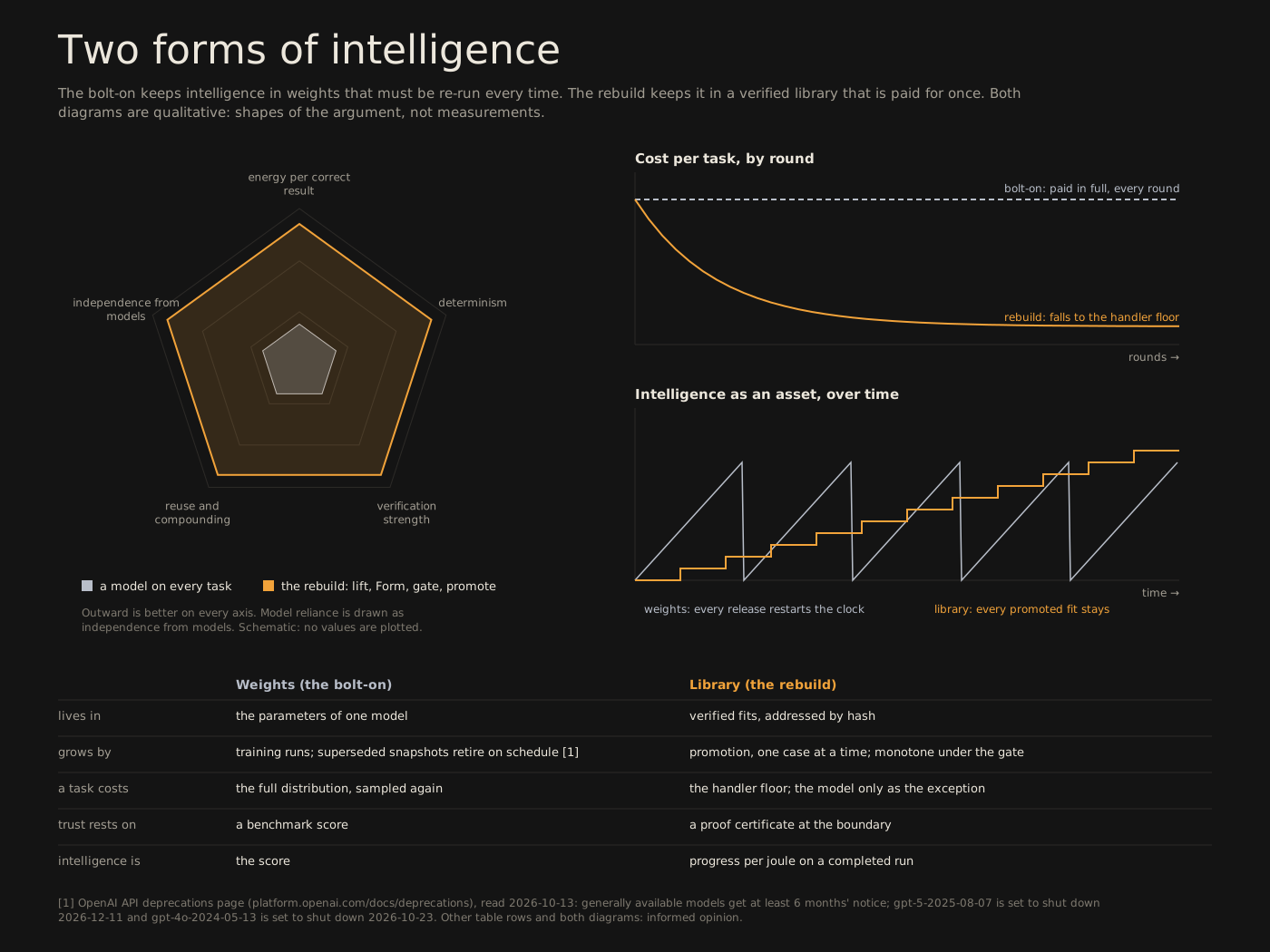
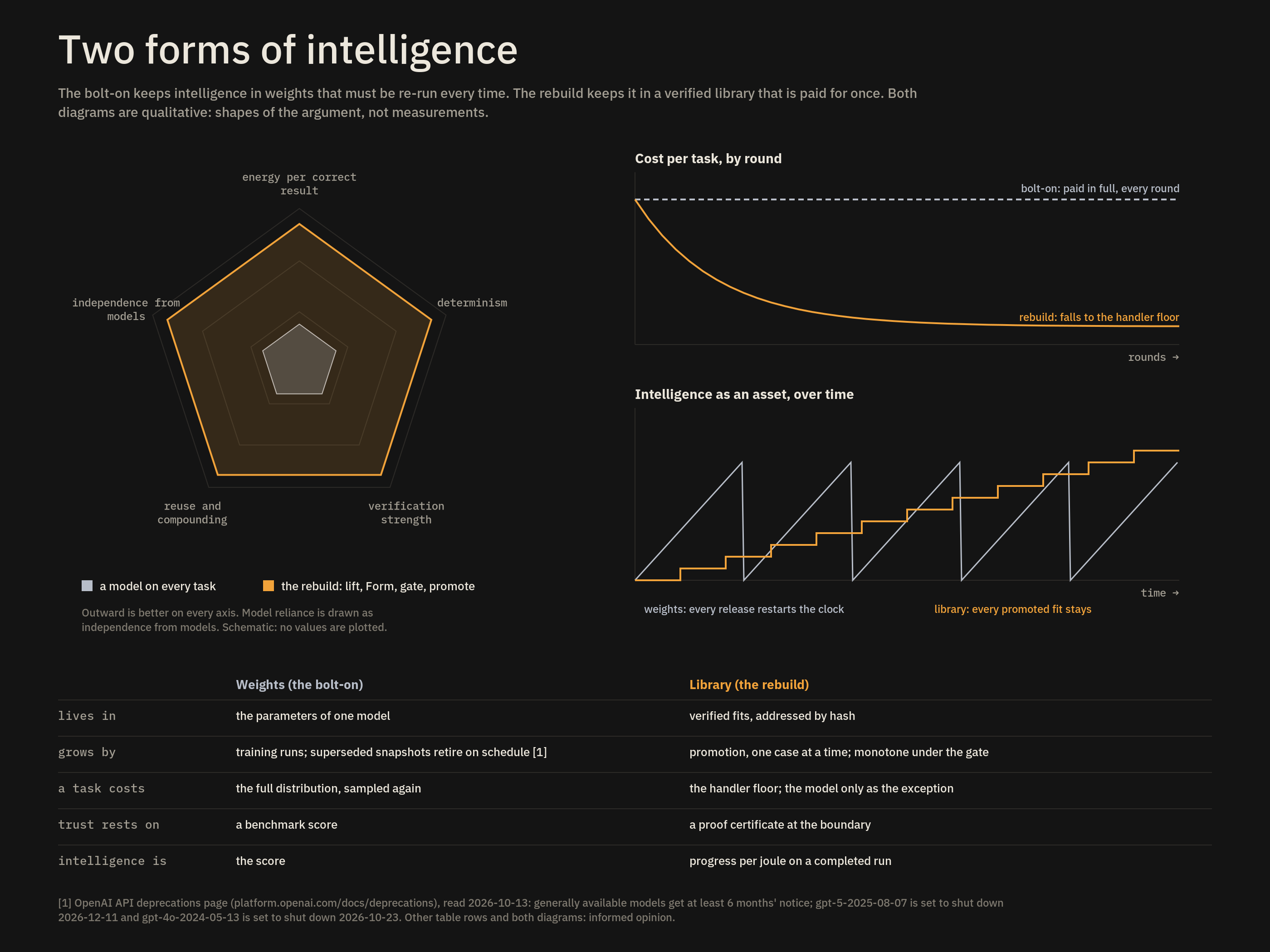
Sources
- [1] OpenAI API deprecations page (platform.openai.com/docs/deprecations), read 2026-10-13: generally available models get at least 6 months' notice; gpt-5-2025-08-07 is set to shut down 2026-12-11 and gpt-4o-2024-05-13 is set to shut down 2026-10-23. Other table rows and both diagrams: informed opinion.
Board 2. The stack, interface by interface
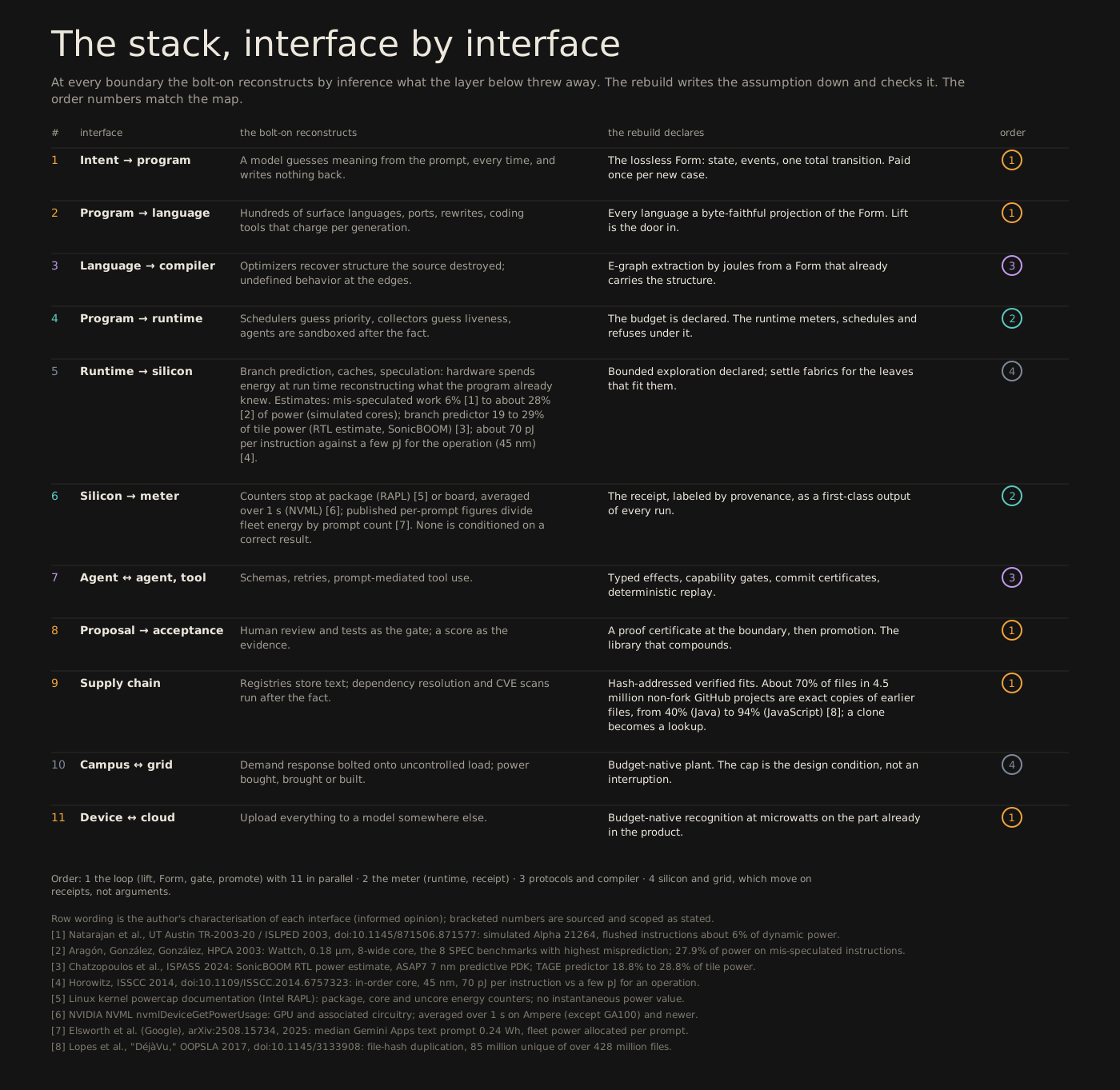
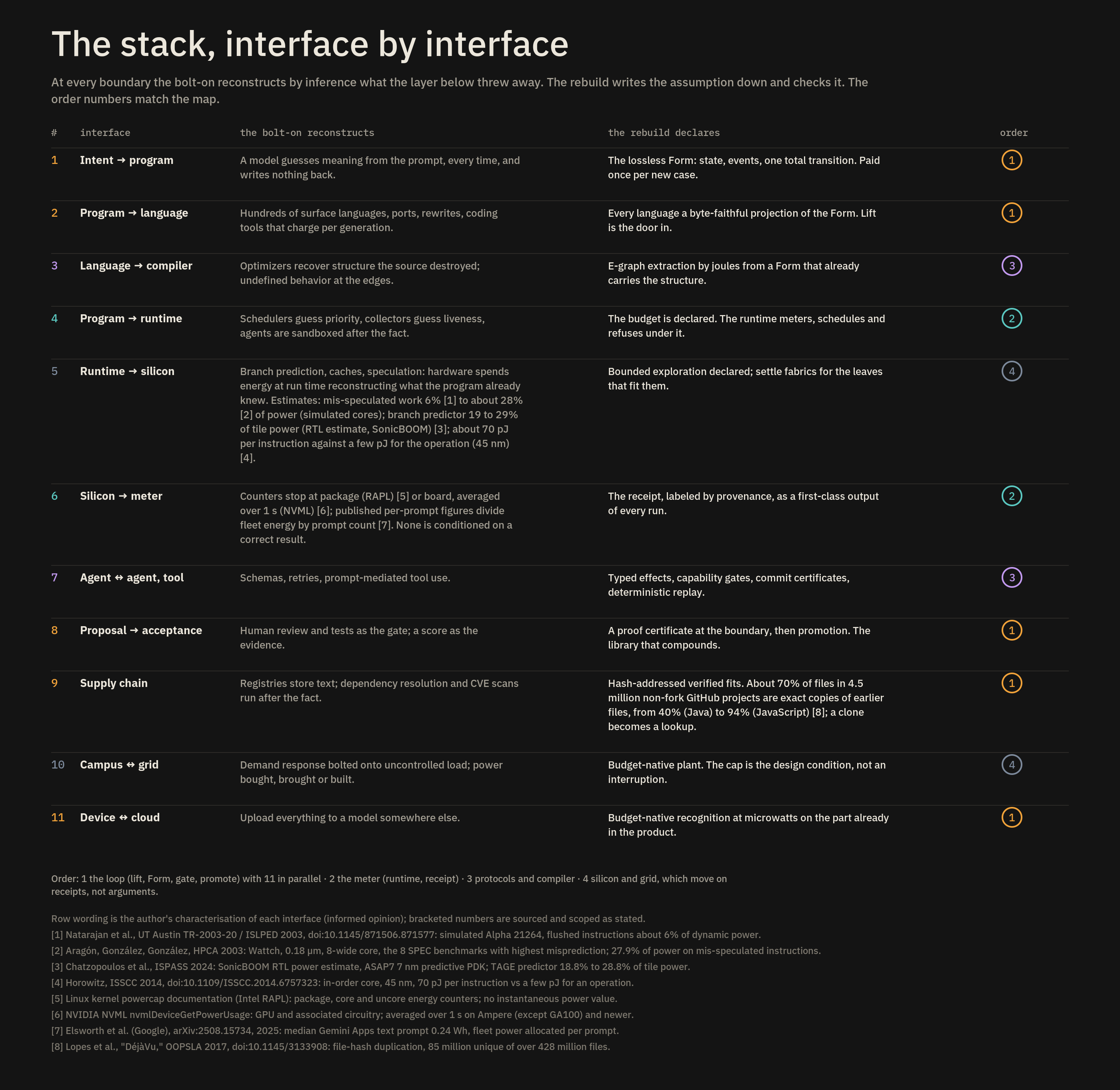
Sources
- [1] K. Natarajan, H. Hanson, S. W. Keckler, C. R. Moore and D. Burger, "Microprocessor Pipeline Energy Analysis: Speculation and Over-Provisioning," UT Austin TR-2003-20 (ISLPED 2003), doi:10.1145/871506.871577: simulated Alpha 21264, flushed instructions about 6% of dynamic power.
- [2] J. L. Aragón, J. González and A. González, "Power-Aware Control Speculation through Selective Throttling," HPCA 2003: Wattch, 0.18 µm, 8-wide core, the 8 SPEC benchmarks with highest misprediction; 27.9% of power on mis-speculated instructions.
- [3] Chatzopoulos et al., "Energy-Efficiency Analysis of RISC-V OoO CPUs," ISPASS 2024: SonicBOOM RTL power estimate, ASAP7 7 nm predictive PDK; TAGE predictor 18.8% to 28.8% of tile power.
- [4] M. Horowitz, "Computing's Energy Problem (and what we can do about it)," ISSCC 2014, doi:10.1109/ISSCC.2014.6757323: in-order core, 45 nm, 70 pJ per instruction vs a few pJ for an operation.
- [5] Linux kernel documentation, Power Capping Framework (powercap, Intel RAPL): package, core and uncore energy counters; no instantaneous power value.
- [6] NVIDIA NVML, nvmlDeviceGetPowerUsage: GPU and associated circuitry; averaged over 1 s on Ampere (except GA100) and newer.
- [7] C. Elsworth et al. (Google), "Measuring the environmental impact of delivering AI at Google scale," arXiv:2508.15734, 2025: median Gemini Apps text prompt 0.24 Wh, fleet power allocated per prompt.
- [8] C. V. Lopes et al., "DéjàVu: A Map of Code Duplicates on GitHub," OOPSLA 2017, doi:10.1145/3133908: file-hash duplication, 85 million unique of over 428 million files.
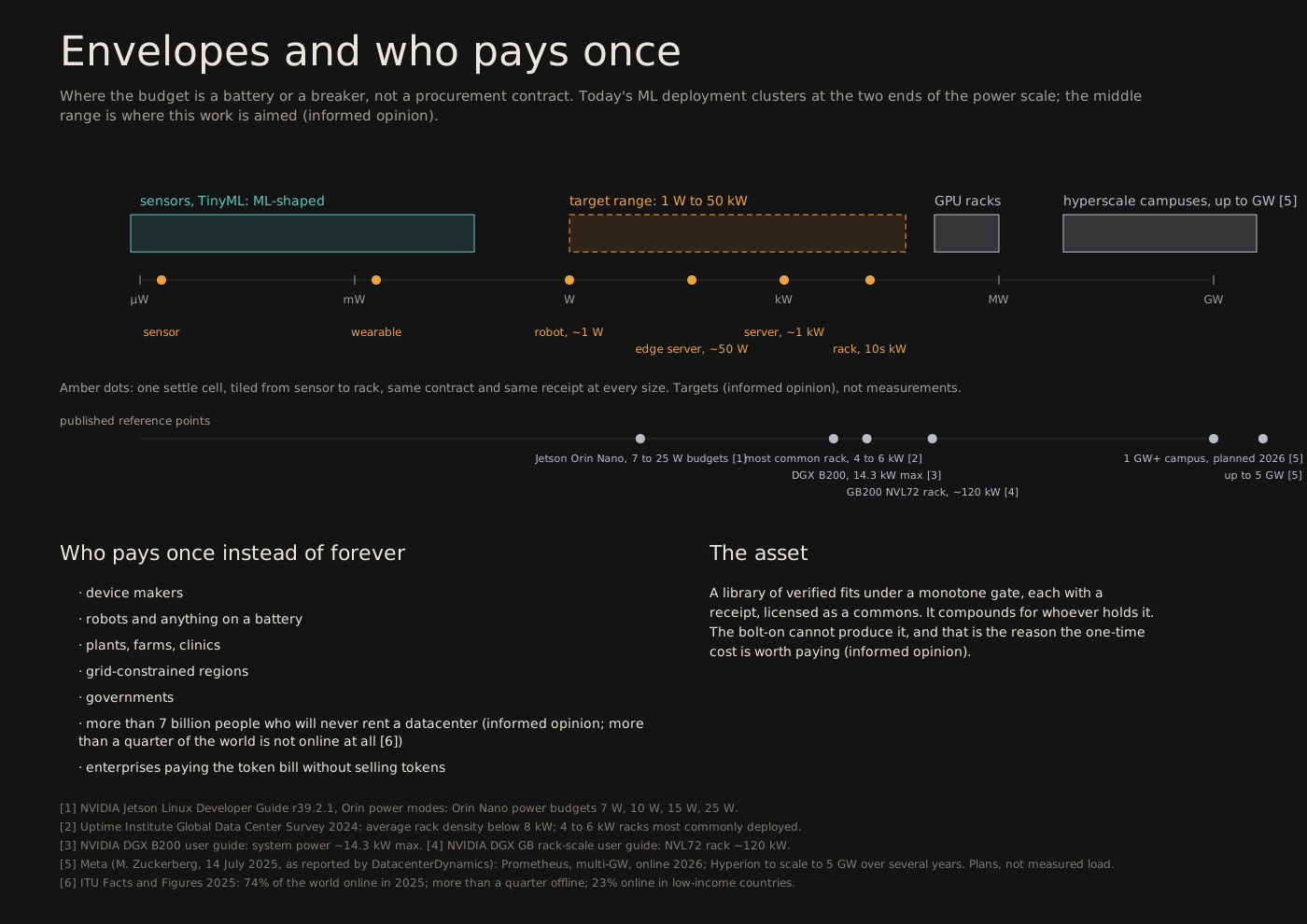
Board 3. Envelopes, and who pays once
Sources
- [1] NVIDIA Jetson Linux Developer Guide r39.2.1, Orin power modes: Orin Nano power budgets 7 W, 10 W, 15 W, 25 W.
- [2] Uptime Institute Global Data Center Survey 2024: average rack density below 8 kW; 4 to 6 kW racks most commonly deployed.
- [3] NVIDIA DGX B200 user guide: system power about 14.3 kW maximum.
- [4] NVIDIA DGX GB rack-scale user guide: NVL72 rack about 120 kW.
- [5] Meta (M. Zuckerberg, 14 July 2025, as reported by DatacenterDynamics, S. Moss): Prometheus, multi-GW, online 2026; Hyperion to scale to 5 GW over several years. Plans, not measured load.
- [6] ITU Facts and Figures 2025: 74% of the world online in 2025; more than a quarter offline; 23% online in low-income countries.